


Why your professional identity is about so much more than a title
Beyond the Business Card: Redefining Who You Are at Work
Imagine you are at a networking event or a casual dinner party. Within the first five minutes, someone inevitably asks: "So, what do you do?" For most of us, the reflexive answer is our job title. "I’m a Marketing Manager," or "I’m a Senior Analyst."
While these titles provide a convenient shorthand for our daily tasks, they are often shallow representations of our actual professional worth. In a rapidly evolving labor market—where roles are being automated and skills-based hiring is becoming the new gold standard—relying solely on a title to define your identity is a risky strategy. At Gateway 2 Talent, we believe that your professional identity should be a sturdy foundation that moves with you, regardless of the name on your office door.
The Limitation of the Job Title
Job titles are, by nature, static and exclusionary. They describe a position within a specific hierarchy at a specific point in time. However, the modern world of work is anything but static. When you tie your identity too closely to a title, you limit your own perception of what you are capable of achieving. If that title disappears due to a layoff or a company restructure, it can lead to a profound sense of loss and confusion.
Furthermore, titles are inconsistent across industries. A "Director" at a startup might have the same responsibilities as a "Lead Associate" at a global corporation. If you focus only on the label, you might miss out on opportunities where your skills are a perfect match, simply because the title doesn't look like the one you currently hold.
The Shift to a Value-Based Professional Identity
Building a professional identity that transcends your title requires a shift in perspective. Instead of focusing on *what* you are, start focusing on *how* you contribute and the unique value you bring to the table. This is the essence of talent transformation.
Identifying Your Core Competencies
Your identity should be built on a stack of core competencies. These are the skills and attributes that remain constant even if your industry changes. For example, instead of seeing yourself as a "Project Manager," see yourself as someone who "facilitates complex cross-functional communication and streamlines operational workflows."
By deconstructing your role into its fundamental skills—such as strategic thinking, empathetic leadership, or data storytelling—you create a more resilient professional self-image. This approach aligns perfectly with the global shift toward skills-based hiring, where employers look for what you can *do* rather than just where you’ve been.
Defining Your Professional Values
Another layer of your identity involves your values. What motivates you to do your best work? Do you value innovation, mentorship, efficiency, or social impact? When your professional identity is rooted in values, you become more intentional about the roles you pursue. You aren't just looking for the next title; you are looking for an environment where your values can flourish.
Actionable Steps to Redefine Your Professional Self
If you feel like your identity has become synonymous with your current job description, it’s time to take a step back and recalibrate. Here are some practical ways to broaden your professional horizons:
- Conduct a Skill Audit: Write down every task you perform in a week. Now, strip away the industry jargon. What are the underlying skills? Are you negotiating? Analyzing? Creating? These are the building blocks of your true identity.
- Draft a "Value Statement": Try to describe what you do without using your job title. Focus on the problem you solve and the people you help. For example: "I help growing businesses translate complex data into actionable marketing strategies."
- Invest in Continuous Learning: Your identity should be a living document. By consistently adding new certifications or learning new tools, you reinforce the idea that you are a "lifelong learner" rather than just a "fixed role holder."
- Network Outside Your Bubble: Talk to people in completely different industries. Explain your skills to them and see how they interpret your value. This often reveals transferable skills you hadn't considered.
- Update Your Digital Presence: Look at your LinkedIn headline. If it only lists your current title, change it. Use that space to highlight your expertise and the impact you make.
Future-Proofing Your Career Through Identity
The future of work belongs to those who are adaptable. As we move toward more flexible, borderless, and technology-driven work environments, the individuals who thrive will be those who know exactly who they are—beyond their business cards. When you decouple your identity from your title, you gain a sense of agency. You are no longer waiting for a company to give you an identity; you are bringing your own identity to the company.
This mindset shift is especially crucial during career transitions. Whether you are pivoting to a new industry or returning to the workforce after a break, a strong, skill-based identity allows you to tell a compelling story to recruiters and hiring managers. It shows that you understand your worth and that your value isn't dependent on a specific set of circumstances.
Final Thoughts
You are more than the 40 hours a week you spend in a specific chair. Your professional identity is a rich tapestry of experiences, innate talents, hard-won skills, and personal values. By taking the time to define yourself on your own terms, you not only become more attractive to modern employers but also find more satisfaction and confidence in your career journey.
At Gateway 2 Talent, we are dedicated to helping you navigate this transformation. The world of work is changing, but with a clear sense of who you are, you’ll be ready for whatever comes next.


The Gradual Shift Toward Skills Based Hiring in Global Markets
Beyond the Parchment: Rethinking the Value of Pedigree
For decades, the global professional landscape operated on a silent, nearly universal agreement: the university degree was the ultimate gatekeeper. It was the gold standard, a shorthand for capability, and the primary lens through which recruiters viewed potential. We looked at the logos on a resume—the prestigious institutions and the specific titles—rather than the actual hands that did the work. But as we stand at the crossroads of a new era, that old agreement is beginning to fray. We are witnessing a quiet but profound erosion of the degree requirement, replaced by a more nuanced, introspective approach known as skills-based hiring.
Expanding the search beyond traditional borders through international recruitment strategies allows organizations to combine diverse skills with fresh perspectives to fuel continuous innovation.
This shift is not merely a trend or a reaction to a tight labor market; it is a fundamental rethinking of what it means to be 'qualified.' It is a realization that a piece of parchment, while valuable, is often a lagging indicator of a person’s ability to adapt to the present moment. In a world where the half-life of technical skills is shrinking every year, the industry is forced to ask: Does a four-year degree from a decade ago truly reflect an individual's capacity to innovate today? At Gateway 2 Talent, we see this as the essence of talent transformation—the move from static credentials to dynamic capabilities.
The Human Element: Equity and the Hidden Worker
When we reflect on the traditional hiring process, we must acknowledge who was left behind. By prioritizing specific educational paths, we inadvertently built walls around opportunity. Skills-based hiring serves as a hammer to those walls. It allows us to see the 'hidden workers'—the self-taught coders, the community leaders with innate project management skills, and the veterans whose military experience translates into unparalleled operational excellence but lacks a corporate equivalent.
This transition is deeply human. It moves us away from a transactional view of human resources and toward a more holistic view of human potential. When a global company decides to remove degree requirements for mid-level roles, they aren't just widening their talent pool; they are making a statement about equity. They are acknowledging that talent is universal, but opportunity has historically been concentrated. By focusing on what a person can actually do, rather than where they learned to do it, we foster a more inclusive global market that values diverse thought and lived experience.
The Velocity of Change in Global Markets
The acceleration of technology—specifically the rise of artificial intelligence and automation—has acted as a catalyst for this shift. In global markets like Singapore, London, and New York, the demand for specific, niche skills often outpaces the ability of traditional academic institutions to produce curricula. This has necessitated a 'just-in-time' approach to talent.
Organizations are no longer looking for someone who knows everything; they are looking for someone who can learn anything. This introspective look at organizational needs has led to the rise of internal mobility and upskilling. Companies are realizing that the talent they need might already be sitting in their offices, hidden behind a job title that doesn't reflect their true potential. The shift toward skills-based hiring is, therefore, as much about internal transformation as it is about external recruitment.
The Core Pillars of the Skills-First Revolution
As we navigate this transition, several key themes emerge that define how businesses and individuals are adapting to the future of work. These pillars represent the bridge between the old world of credentials and the new world of competencies:
- The Deconstruction of Roles: Jobs are being broken down into specific tasks and the skills required to complete them, allowing for more flexible hiring.
- The Rise of Verified Competencies: Digital badges, portfolios, and practical assessments are becoming more trusted than a simple line on a CV.
- Agility Over Longevity: Employers are prioritizing a candidate's 'learnability'—the ability to quickly acquire and apply new knowledge.
- Democratization of Opportunity: Removing the degree barrier opens doors for non-traditional candidates, increasing socio-economic mobility.
- Data-Driven Matching: Using AI to match specific skill sets to project needs, reducing the bias often found in traditional interviewing.
Navigating the Cultural Resistance
Despite the clear benefits, the path to a skills-first world is not without its obstacles. There is a certain comfort in the old way of doing things. For hiring managers, a degree acts as a safety net—a way to outsource the validation of a candidate’s intellect to a third party. Moving away from this requires a level of courage and a willingness to engage in deeper, more meaningful assessments of talent.
It requires us to ask different questions during the interview process. Instead of 'Where did you study?' we must ask, 'How did you solve this specific problem?' or 'How did you teach yourself this new technology?' This shift in dialogue is reflective of a broader cultural change where we value the journey of learning as much as the destination of a degree.
A Future Built on Potential
As we look toward the future of work, the gradual shift toward skills-based hiring feels less like a corporate strategy and more like a return to authenticity. It is a recognition that human talent is multifaceted, resilient, and often unquantifiable by traditional metrics. For the individual, this shift offers a sense of agency. Your career is no longer defined by a choice you made at age eighteen, but by your ongoing commitment to growth and transformation.
For global markets, this evolution promises a more robust and resilient workforce. When we hire for skills, we build teams that are better equipped to handle the unknown. We create a culture of continuous improvement where the 'Gateway' to talent is not a narrow door, but a wide-open horizon. At Gateway 2 Talent, we remain committed to guiding both businesses and individuals through this introspective journey, ensuring that the future of work is one where everyone’s true potential has the chance to shine.

The Power of Talent Transformation: Building Skills for Tomorrow
In an era defined by automation, digital disruption, and shifting workforce dynamics, talent transformation has become more than a strategic initiative — it’s a survival imperative. Businesses that fail to evolve their workforce risk stagnation. Those that invest in skill development, adaptability, and continuous learning position themselves for lasting success in the new world of work.
1. What Is Talent Transformation?
Talent transformation isn’t just about reskilling or upskilling employees — it’s about redefining how organizations think about human potential. It means aligning people’s capabilities with the future direction of the business and the evolving demands of the market.
This transformation focuses on developing skills that go beyond technical proficiency — including critical thinking, creativity, digital literacy, and emotional intelligence — the competencies that machines can’t replicate and businesses can’t thrive without.
2. Why Traditional Training Models No Longer Work
Old models of employee training were often reactive, one-size-fits-all, and disconnected from strategic goals. Today, change happens too quickly for static learning approaches to keep up.
Modern organizations must adopt continuous, data-driven learning ecosystems — powered by AI analytics, personalized development paths, and digital platforms that make knowledge accessible anytime, anywhere. Learning should be embedded in daily work, not isolated from it.
3. The Link Between Skill Evolution and Business Growth
When businesses invest in developing their people, they unlock more than productivity — they cultivate innovation, agility, and engagement.
Research shows that organizations prioritizing talent transformation experience faster adaptation to market changes, higher retention rates, and stronger competitive advantages. In essence, building skills for tomorrow drives growth today.
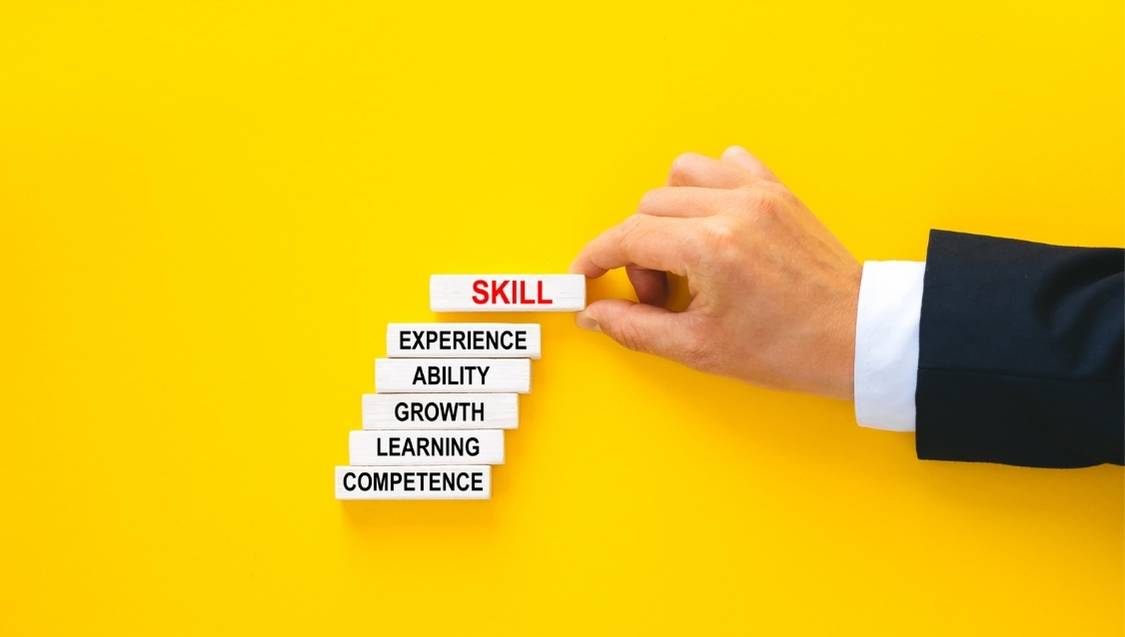
4. Technology as the Enabler of Human Potential
Digital transformation isn’t replacing people — it’s redefining their roles. Automation handles repetitive tasks, but creativity, leadership, and emotional intelligence remain uniquely human strengths.
Forward-thinking companies use technology to empower rather than displace — leveraging AI-driven learning platforms, skill-mapping tools, and performance analytics to personalize career journeys and identify emerging capabilities within the workforce.
5. Creating a Culture of Lifelong Learning
The foundation of any successful talent transformation strategy is culture. A company that values curiosity, experimentation, and growth will naturally attract and retain adaptable employees.
Encouraging self-directed learning, rewarding skill development, and promoting cross-functional collaboration builds an ecosystem where learning becomes part of everyday operations — not just an HR initiative.
6. Preparing for Tomorrow’s Roles — Today
The jobs of the future are already emerging: AI ethicists, sustainability officers, data storytellers, experience designers. Organizations that anticipate these shifts and develop skills ahead of demand will lead the next economic wave.
Proactive skill forecasting, supported by predictive analytics, helps identify which roles are evolving — and how to prepare talent pipelines to meet them.
Conclusion: Transform Talent, Transform the Future
The next decade belongs to businesses that understand one truth — your greatest innovation engine is your people.
Talent transformation isn’t an expense; it’s an investment in resilience, creativity, and relevance. Building the workforce of tomorrow starts today — with a commitment to continuous learning, adaptable leadership, and a vision that sees change as opportunity, not disruption.
For those interested in learning more about inclusive recruitment models, this resource provides valuable insights and information on the topic.

Bridging Borders: Why International Recruitment Drives Innovation
In today’s global economy, innovation no longer recognizes national boundaries. The most forward-thinking companies are those that look beyond local talent pools and tap into the creativity, diversity, and expertise found across the world. International recruitment is no longer a luxury reserved for multinational corporations — it’s a strategic necessity for any business that aims to lead rather than follow.
1. Diversity Fuels Innovation
Innovation thrives where different perspectives meet. When businesses bring together people from varied cultural, educational, and professional backgrounds, they create an environment rich in ideas.
International recruitment introduces fresh thinking, unique problem-solving approaches, and creative synergies that local hiring alone cannot provide. It’s this mix of experiences that drives groundbreaking solutions — the kind that set market leaders apart from competitors.
2. Global Talent Expands Organizational Agility
The pace of technological and market change demands agility. By integrating global talent, businesses can respond to new opportunities and challenges faster.
A geographically diverse team brings a broader understanding of markets and consumer behaviors, enabling organizations to adapt products, services, and strategies for different regions. This adaptability isn’t just an advantage — it’s a survival skill in an increasingly unpredictable global landscape.
3. Access to Scarce Skills and Expertise
In many industries, demand for specialized skills far exceeds local supply. International recruitment helps bridge that gap.
Whether it’s data science, AI engineering, or green energy innovation, sourcing talent globally allows businesses to access niche expertise that may not be available domestically. Companies that harness global skill networks gain a sharper competitive edge and accelerate their capacity to innovate.
4. Building a Globally Minded Company Culture
Hiring internationally doesn’t just fill skill gaps — it reshapes company culture. Teams built across borders tend to foster open-mindedness, empathy, and cross-cultural understanding.
Such environments are ideal for innovation because they encourage questioning assumptions and exploring new ideas. A global workforce strengthens collaboration and ensures that creative thinking becomes part of the company’s DNA, not just a corporate slogan.

5. Leveraging Technology to Unite Global Teams
Advancements in communication and collaboration tools have made global hiring seamless. From virtual onboarding to AI-driven project management, technology bridges the distance between continents.
Remote-first and hybrid work models now enable companies to tap into talent anywhere, maintaining productivity while reducing geographical limitations. The future of recruitment isn’t about relocation — it’s about connection.
6. Enhancing Brand Reputation Through Inclusivity
A company that embraces international recruitment signals progressiveness, inclusivity, and global awareness. This reputation not only attracts top-tier talent but also strengthens relationships with clients, investors, and partners who value cultural intelligence and ethical growth.
In a globalized market, brands that reflect diversity internally are far better positioned to connect authentically with customers worldwide.
Conclusion: Innovation Has No Borders
The future of innovation is global. By embracing international recruitment, businesses gain more than talent — they gain perspective, creativity, and resilience. In a world defined by change, the most successful organizations will be those that build across borders and lead through diversity.
International recruitment isn’t just about filling roles. It’s about fueling progress.

Adapting to the Future of Work: How Businesses Can Stay Competitive
The future of work is not a distant concept — it’s happening now. Automation, remote collaboration, and shifting employee expectations are redefining how organizations operate. To stay competitive, businesses must not only embrace change but anticipate it. The key to thriving in this new era lies in agility, innovation, and talent strategy.
1. Embracing Workforce Agility
Rigid business structures no longer work in a rapidly evolving economy. The companies leading the future are those capable of adapting their workforce to market shifts — whether through hybrid work models, upskilling initiatives, or flexible staffing solutions.
Agility means building teams that can pivot quickly, learn fast, and deliver consistent value regardless of disruption. It’s not about replacing human roles with technology but augmenting human capability with smarter tools and adaptable systems.

2. Leveraging Technology as a Strategic Partner
Technology has evolved from a support function into a core business driver. Artificial intelligence, machine learning, and cloud-based collaboration platforms are transforming how work gets done.
Businesses that succeed in the future will use these tools not just for efficiency, but for strategic foresight — analyzing data to predict trends, optimize workflows, and enhance decision-making. The smartest organizations view digital transformation as an ongoing journey, not a one-time investment.
3. Prioritizing Continuous Learning and Development
In a world where industries shift overnight, knowledge becomes outdated quickly. This makes continuous learning a competitive advantage. Companies that invest in employee development cultivate resilience, innovation, and long-term loyalty.
Encouraging employees to upskill through online training, mentorship programs, or cross-functional projects builds a workforce that thrives on curiosity — a defining trait of future-ready organizations.
4. Redefining Leadership for a Digital Era
Leadership in the future of work is less about hierarchy and more about human connection. Today’s leaders must guide teams through ambiguity, champion collaboration, and inspire through purpose rather than authority.
Empathetic, emotionally intelligent leadership drives engagement and innovation — two qualities that determine how effectively an organization can adapt to change. The strongest leaders aren’t just strategists; they’re enablers of trust and creativity.
5. Building a Culture of Inclusion and Purpose
Modern employees seek more than a paycheck — they seek meaning. A purpose-driven culture attracts top talent, fosters retention, and strengthens brand reputation. Businesses that champion diversity, sustainability, and social responsibility resonate more deeply with both customers and employees.
A future-proof company aligns its mission with broader societal values, creating workplaces where people feel empowered to contribute beyond their job titles.

6. Strategic Talent Partnerships for the Modern Age
In the gig economy and networked workforce era, the best talent may not always be on your payroll. Businesses are increasingly turning to talent networks, consultants, and flexible staffing models to fill skill gaps quickly and efficiently.
This shift from traditional recruitment to strategic talent partnerships enables companies to scale expertise on demand — a critical advantage in industries driven by rapid innovation.
Conclusion: Future-Ready Is Human-Centered
The future of work is not solely about automation or technology — it’s about people. Success will depend on how effectively organizations combine human creativity with digital intelligence.
Businesses that invest in adaptability, continuous learning, and purpose-driven leadership will not just survive change — they’ll lead it.